Academic Awards and Honours

In their history, the institutes of the Göttingen Campus have been highly successful in attracting the "best minds". The outstanding scientists have established the international reputation of the institutions and continue to shape their profile to this day. Here you will find a small selection of the long list of historical personalities who have studied or researched in Göttingen, as well as an overview of current award winners.
Latest Awards

  • The project INSIDE will use newly discovered solar oscillations to reveal the Sun's hidden magnetic field and uncover how the solar dynamo works.
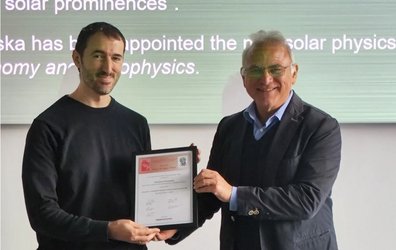
    The European Research Council (ERC) has awarded Prof. Dr. Laurent Gizon of the Max Planck Institute for Solar System Research (MPS) and the Faculty of Physics at the University of Göttingen one of its prestigious ERC Advanced Grants. Over the next five years, the funding of 2.5 million euros will support the project INSIDE ("Mapping Magnetic Fields in the Solar Interior"), which seeks to answer one of the most important unresolved questions in…
  • Göttingen University Musicologist awarded ERC Advanced Grant of 2.6 million euros for VibE
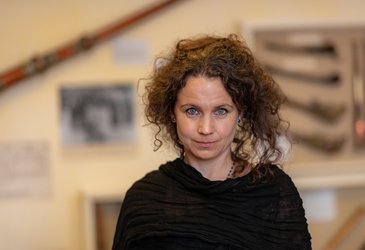
    Birgit Abels, Professor of Cultural Musicology at the University of Göttingen, has been awarded an Advanced Grant by the European Research Council (ERC). The ERC has funded her project “Vibrant Environmentality: Sonic Agentivity in the Anthropocene” (VibE) with around 2.6 million euros over a period of five years. This award will allow Abels and her team to investigate how people co-create their world through interaction with sound and how making…
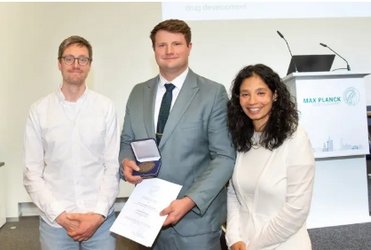
  • Alexander Rotsch has been awarded the Otto Hahn Medal by the Max Planck Society (MPS) for outstanding achievements in his dissertation. The MPS presented him with the medal at its annual meeting on June 17 in Frankfurt am Main.
    For his doctoral thesis, Alexander Rotsch investigated a molecular biological “criminal case”: the theft of mRNA caps by influenza viruses. Caps mark mRNAs as cell-derived molecules and thus as harmless. If a cap is missing, the immune system recognizes the mRNA as foreign and potentially harmful – and triggers an antiviral response that degrades the RNA. The caps are therefore essential for the protection of mRNA molecules. To camouflage itself…
  • Professor Holger Militz at Göttingen University receives Marcus Wallenberg Prize
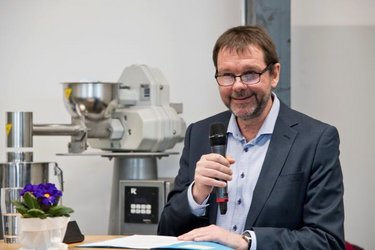
    Professor Holger Militz at the University of Göttingen has been awarded the 2026 Marcus Wallenberg Prize. This honour, from the Marcus Wallenberg Foundation for International Scientific Collaboration, recognises Militz for his ground-breaking contributions to the research and industrial application of wood modification technologies. Considered the world’s most prestigious research award in this area, it recognizes scientific achievements which…
  • MSCA fellowship funds METAGROLAND project on optimising environmental farming schemes
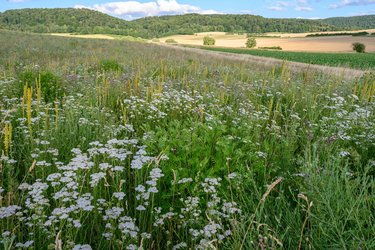
    Dr Elena Velado-Alonso at the University of Göttingen has been awarded a Marie Skłodowska-Curie Actions (MSCA) Postdoctoral Fellowship to launch “METAGROLAND: Understanding metacommunity dynamics through plant–pollinator interactions in agroecosystems to improve the efficiency of agri-environmental schemes.” Agri-environmental schemes (AES) are government-funded schemes set up to help farmers manage their land in an environmentally friendly way.…
  • Patrick Jendritza from the Salk Institute for Biological Studies, USA, has been awarded a junior fellow position at the Else Kröner Fresenius Center for Optogenetic Therapies (EKFZ-OT) at Göttingen University Medical Center (UMG). Since January 1, 2026, the young scientist has been leading the “Visual Circuits” research group, which is working on the development of light-controlled brain-computer interfaces for restoring vision. The research…
  • Re-examining and improving a 33-year-old publication, the MPS researcher confirms that the Sun does not account for the increase in Earth’s temperature over the past century.
    How do fluctuations in the Sun's brightness affect the climate on Earth? And what role does our star play in current climate change? To answer these questions, a look into our star’s past is necessary. In this endeavor, the most meaningful parameter is the total solar irradiance. It indicates how much radiation from the Sun in all wavelengths reaches Earth’s atmosphere. The total solar irradiance can only be measured directly with the necessary…