News from the Göttingen Campus

A study by the German Primate Center shows parallels between Guinea baboons and human hunter-gatherer societies
The quality of relationships and the social organization of a society, influence the transfer of valuable resources not only in humans but also in other primates. Researchers at the German Primate Center (DPZ) – Leibniz Institute for Primate Research in Göttingen have discovered this using the example of Guinea baboons (Papio papio), which distribute meat according to patterns similar to those of human hunter-gatherer groups. The team analyzed…
Researchers at Göttingen Campus decipher structure and function of a key hearing protein
Researchers in Göttingen have elucidated the structure and function of otoferlin, a protein that plays a crucial role in the hearing process. Loss of otoferlin or impairment of its function causes a frequent form of congenital deafness. The results, published in the journal Science Advances, mark a milestone after more than two decades of research on otoferlin at Göttingen Campus and contribute to optimizing the first gene therapies for the…
EU funds international partnership for network to understand biological systems
Complex biological systems are more than the sum of their parts – their properties emerge from the dynamic interaction of their components, such as molecules or cells. PhD researchers now have the opportunity to develop their own theoretical perspective on these systems as part of an international Doctoral Network. A European consortium initiated by researchers from the University of Göttingen, the Max Planck Institute for Dynamics and…
Funded by an ERC Starting Grant, MPS researcher Christian Renggli investigates a crucial phase of planetary evolution.
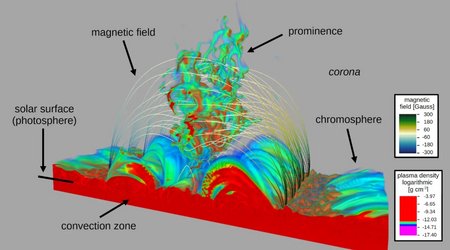
In the early days of our Solar System, huge oceans of red-hot magma covered each of the four inner planets Mercury, Venus, Earth, and Mars. The heat required to melt the rock came from the decay of radioactive elements or from violent impacts. Gases escaped from the magma, creating the first atmospheres. Such magma oceans and their pristine atmospheres are likely to still exist today on young, still hot exoplanets outside our Solar System. The…
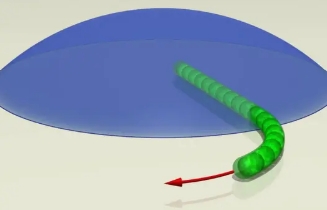
In turbulent fluids, mixing of the components happens easily. However, in more viscous fluids such as those enclosed within cellular compartments, the intermixing of particles and molecules is much more challenging. As time also plays a role in such systems, the slow mixing by molecular movement is typically not sufficient and efficient stirring strategies are thus required to maintain functionality.
The diversity of lemurs did not come about through a one-off “explosion in the number of species”, also known as radiation, but dynamically through several radiations and hybridization.
Lemurs are among the best-known representatives of Madagascar's animal kingdom. They make up more than 15 percent of all primate species living today – even though the island covers less than one percent of the earth's land surface. An international research team involving the German Primate Center – Leibniz Institute for Primate Research (DPZ) has now shown: The species diversity of lemurs is not the result of a single large radiation, as is…
The MPI-DS celebrates its 100th anniversary on July 16th
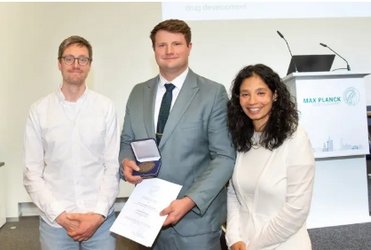
One hundred years ago, the institute invited guests in the auditorium on Wilhelmsplatz to celebrate the opening of the institute. A century later, Eberhard Bodenschatz, managing director of the MPI-DS, welcomed over 300 guests back to the same venue. Among them was Falko Mohrs, Minister for Science and Culture of Lower Saxony. “We are proud to have you here as a Max Planck Institute,” said Mohrs in his speech. Patrick Cramer, President of the Max…
Innovation to benefit green technology, drug development, biomedical imaging, materials science
University of Göttingen Professors – Lutz Ackermann, Timo Betz and Jörg Enderlein – have each been awarded Proof of Concept (PoC) grants by the European Research Council (ERC). These grants provide top-up funding of €150,000 over 18 months to outstanding researchers, who have already received ERC funding, so that they can build on the innovation potential of their findings. This enables Europe’s top scientists to develop initiatives that boost…
New study shows: Power relations between males and females in primates are more complex than thought
The widespread assumption that males always take on the dominant role in primates has been refuted by new research findings. Scientists from the German Primate Center in Göttingen, the University of Montpellier and the Max Planck Institute for Evolutionary Anthropology in Leipzig have investigated the power relations between males and females in 121 primate species in a large study. Their results show that clear dominance of one sex over the…
The space probe’s optical bench is now connected to the service module. Starting in 2027, the European mission will search for Earth-like worlds outside our Solar System.
The European exoplanet mission PLATO, which will be launched into space at the end of next year, has reached an important milestone. The optical bench with its 26 cameras has now been assembled in the clean rooms of the aerospace company OHB System AG in Oberpfaffenhofen (Germany). The cameras are the eyes of the mission. They will enable PLATO to peer at a total of a quarter of a million stars in the Milky Way and detect exoplanets in the stars’…