News from the Göttingen Campus

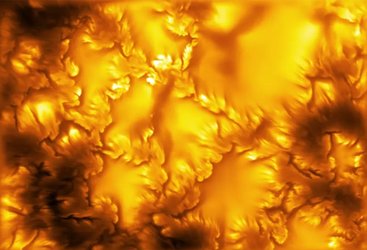
Large amounts of matter need to be lifted into the solar atmosphere to create and sustain the massive plasma structures. New calculations reveal how this is possible.
At more than one million degrees, the Sun’s atmosphere, the corona, is incredibly hot. However, not everywhere. Time and again, huge structures of significantly cooler solar plasma - about 10,000 degrees - appear within the corona. These structures are known as prominences. They span up to several thousand kilometers and often resemble flickering flames that can take on a wide variety of shapes. Despite their delicate appearance, they are massive…
Professor Holger Militz at Göttingen University receives Marcus Wallenberg Prize
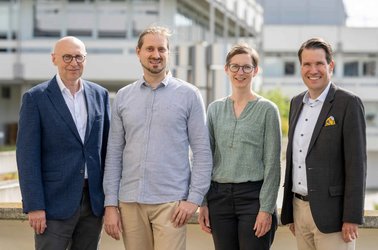
Professor Holger Militz at the University of Göttingen has been awarded the 2026 Marcus Wallenberg Prize. This honour, from the Marcus Wallenberg Foundation for International Scientific Collaboration, recognises Militz for his ground-breaking contributions to the research and industrial application of wood modification technologies. Considered the world’s most prestigious research award in this area, it recognizes scientific achievements which…
Over several years, SARS-CoV-2 produced new variants that spread rapidly worldwide and triggered waves of COVID-19 infections. This pattern may now be undergoing a lasting change.
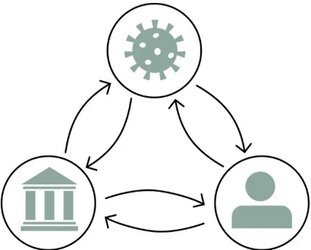
The WHO declared the global health emergency associated with the COVID-19 pandemic to be over in 2023, as most individuals had developed immune protection against the virus through vaccination and/or infection. However, even after 2023, the virus has continued to generate new variants that evade antibody responses and spread globally. This pattern may now be changing in a sustained way. Infection researchers at the German Primate Center – Leibniz…
Filamentous cyanobacteria exhibit a unique navigation strategy due to their chiral gliding
Cyanobacteria are among the most significant life forms in the history of our planet. As one of the first organisms to produce oxygen through photosynthesis, they shaped the early Earth and created the atmosphere in which complex life could develop. A new study shows that filamentous cyanobacteria also developed a navigation mechanism to control their movement when gliding across surfaces. The bacterial filaments typically rotate clockwise…
Using AI to track the evolution of genetic control elements in the cerebellum
An international research team led by Henrik Kaessmann from Heidelberg University and Stein Aerts from Leuven University mapped the activity of genetic control elements in individual cells of the developing cerebellum of four primate species, mice, and marsupials. Based on this, advanced AI models were developed and validated to predict the activity of these control elements based solely on their DNA sequence. Genetic control elements determine…
MSCA fellowship funds METAGROLAND project on optimising environmental farming schemes
Dr Elena Velado-Alonso at the University of Göttingen has been awarded a Marie Skłodowska-Curie Actions (MSCA) Postdoctoral Fellowship to launch “METAGROLAND: Understanding metacommunity dynamics through plant–pollinator interactions in agroecosystems to improve the efficiency of agri-environmental schemes.” Agri-environmental schemes (AES) are government-funded schemes set up to help farmers manage their land in an environmentally friendly way.…
At the end of 2024, ESA’s Solar Orbiter was lucky to witness a strong solar flare – and observed the events leading up to this firework with unprecedented precision.
When Solar Orbiter looked at the Sun on September 30, the space probe captured a spectacular sight: our star hurled radiation and particles into space in a violent eruption. The observation conditions could not have been better. On that very day, ESA’s space probe had reached the point in its elliptical orbit closest to the Sun. Approximately 45 million kilometers—about a third of the distance between the Sun and Earth—separated it from the…
Patrick Jendritza from the Salk Institute for Biological Studies, USA, has been awarded a junior fellow position at the Else Kröner Fresenius Center for Optogenetic Therapies (EKFZ-OT) at Göttingen University Medical Center (UMG). Since January 1, 2026, the young scientist has been leading the “Visual Circuits” research group, which is working on the development of light-controlled brain-computer interfaces for restoring vision. The research…
Re-examining and improving a 33-year-old publication, the MPS researcher confirms that the Sun does not account for the increase in Earth’s temperature over the past century.
How do fluctuations in the Sun's brightness affect the climate on Earth? And what role does our star play in current climate change? To answer these questions, a look into our star’s past is necessary. In this endeavor, the most meaningful parameter is the total solar irradiance. It indicates how much radiation from the Sun in all wavelengths reaches Earth’s atmosphere. The total solar irradiance can only be measured directly with the necessary…
Research team optimises microscope with innovative technology to benefit research and medicine
Light sheet microscopy produces impressive 3D images of tissue and entire organs, such as the delicate cochlea in the inner ear or the complex brain of a mouse. A thin layer of light, the light sheet, moves through the sample and generates a three-dimensional image layer by layer. However, larger samples create problems for conventional microscopes: the process is slow and the images blurred. This led researchers in Göttingen to develop a…