News from the Göttingen Campus

The MPS instruments on board ESA’s JUICE spacecraft have successfully completed their commissioning in space - and delivered their first observational data.
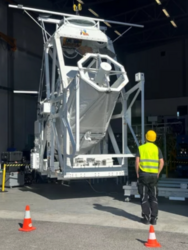
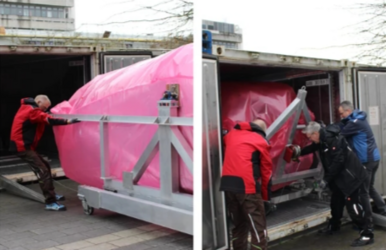
About three months after the launch of ESA's JUICE spacecraft, the scientific instruments that the Max Planck Institute for Solar System Research (MPS) in Germany is sending along on the long journey to Jupiter have completed their first tasks in space. Both instruments have proven that they are fully functional under space conditions and have sent their first scientific data back to Earth: the Particle Environment Package's (PEP) Jovian Electron…
Göttingen research team explores information processing in Deep Neural Networks
Artificial neural networks are everywhere in research and technology, as well as in everyday technologies such as speech recognition. Despite this, it is still unclear to researchers what is exactly going on deep down in these networks. To find out, researchers at the Göttingen Campus Institute for Dynamics of Biological Networks (CIDBN) at Göttingen University, and the Max Planck Institute for Dynamics and Self-Organisation (MPI-DS) have carried…
Future SARS-CoV-2 variants may also regain the ability to infect the lower respiratory tract
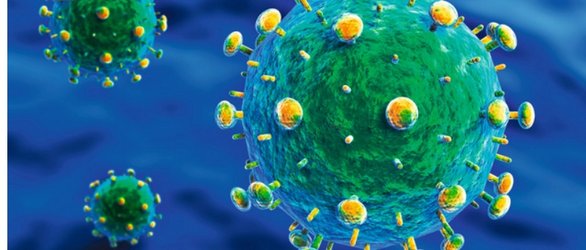
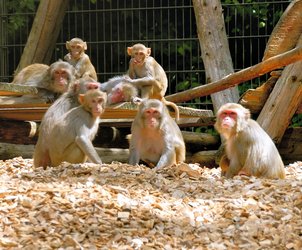
Omicron-derived virus variants are currently responsible for most SARS-CoV-2 infections worldwide. Compared to earlier virus variants, Omicron rarely causes severe disease. According to current knowledge, a major reason for this is that Omicron infects lung cells less efficiently and therefore causes pneumonia less frequently. However, an international team including scientists from the German Primate Center – Leibniz Institute for Primate…
Mouse lemurs that perform better in cognitive tests live longer
Being smart pays off, as it allows for more balanced decision-making. However, the origins of these abilities during evolution remain largely unexplored. Only if smarter individuals enjoy better survival and have higher reproductive rates than their conspecifics, improved cognitive abilities can evolve. Researchers from the German Primate Center (DPZ) – Leibniz Institute for Primate Research have recently examined the link between cognitive…
At the Plenary Assembly of the Max Planck Society in Göttingen on June 22, 2023, Martin Stratmann symbolically passed on the responsibility to his successor, Patrick Cramer, by handing over the chain of office.
The choice of Göttingen as the venue for the 2023 Annual Meeting holds special significance for the Max Planck Society as it marks its 75th anniversary and coincides with a change in presidency. Göttingen is not only the birthplace of the Max Planck Society in its current form, but also holds personal significance for the new President, Patrick Cramer, the ninth President of the Max Planck Society, whose professional “home” has been the Max…
Professor Lutz Ackermann’s research recognised in "Project of the Century" competition
Professor Lutz Ackermann from the University of Göttingen has been awarded a prize in the "Project of the Century" competition of the Werner Siemens Foundation (WSS). Ackermann's team and five others receive a prize of over one million euros each for their ideas. The award ceremony took place on Friday 16 June 2023 in Lucerne. In addition, the six teams will get the opportunity to apply to be a WSS research centre which would enable them to…
New findings challenge the conventional understanding of solar dynamics and could improve predictions of solar weather in the future.
The Sun’s strong, dynamic magnetic field can catapult huge jets of plasma known as coronal mass ejections out into the Solar System. Sometimes these hit Earth, where they can knock out power grids and damage satellites. Scientists don’t fully understand how magnetic fields are generated and amplified inside the Sun, but a study recently published in Nature Astronomy by scientists from the Max Planck Institute for Solar System Research in Germany…
New insights into the genetic diversity and evolution of our closest relatives and the genetic causes of human diseases
Researchers from 24 countries have analyzed the genomes of 809 individuals from 233 primate species, generating the most complete catalog of genomic information about our closest relatives to date. The project, which consists of a series of studies in which researchers from the German Primate Center - Leibniz Institute for Primate Research (DPZ) were also involved, provides new insights into the evolution of primates, including humans, and their…
Research team including Göttingen University explains tooth abrasion in cows
Ruminants like cows have developed an unusual way of digesting their food: they ingest plants, give them a rough chewing and then swallow the half-chewed mash before regurgitating it repeatedly and continuing to chew. This has clear advantages, as a research team including the University of Göttingen has shown: the regurgitated mushy food contains much less hard grit, sand and dust than the food that they first ingested. This protects the teeth…
Zurna Ahmed developed novel experimental environment for rhesus macaques
The Sponsorship Association of the German Primate Center – Leibniz Institute for Primate Research awards the PhD Prize to outstanding doctoral theses in which studies on monkeys play a central role. The prize is endowed with 1000 euros and is supported by the MacLean-Erkelenz Foundation. This year's winner is neuroscientist Zurna Ahmed. She is investigating how movements are planned in the brain. For her project, she developed a novel…