News from the Göttingen Campus

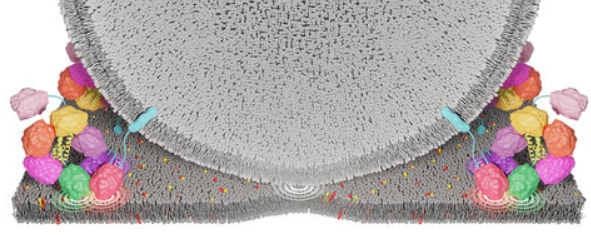
Like all complex organisms, every human originates from a single cell that multiplies through countless cell divisions. Thousands of cells coordinate, move and exert mechanical forces on each other as an embryo takes shape. Researchers at the Göttingen Campus Institute for Dynamics of Biological Networks (CIDBN), the Max Planck Institute for Dynamics and Self-Organisation, and the University of Marburg have now discovered a new way that embryonic…
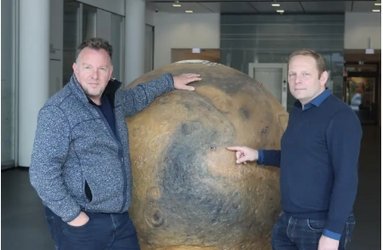
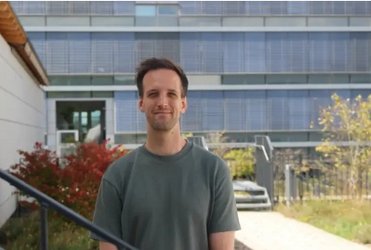
Cai Dieball, scientist at the Max Planck Institute (MPI) for Multidisciplinary Sciences, and Björn Müller, researcher at the MPI for Solar System Research, have been awarded the Otto Hahn Medal for outstanding achievements in their dissertations.
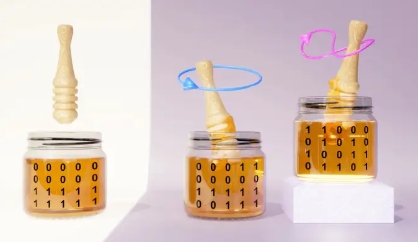
Stochastic dynamics in small systemsAtoms and molecules are continuously in thermal motion in their microscopic world. As a result, small biophysical systems, such as molecular machines, are subject to random dynamics. In his doctoral thesis, Cai Dieball investigated the properties of these random dynamics along individual motion paths, known as trajectories, from the perspective of mathematical physics. He focused on the mathematical concept of…
New study with rhesus monkeys helps to improve brain-computer interfaces
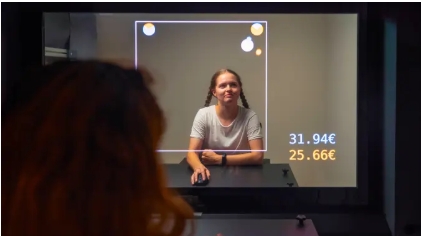
A new study by neuroscientists at the German Primate Center (DPZ) - Leibniz Institute for Primate Research in Göttingen shows that our brain deals with different forms of visual uncertainty during movements in distinct ways. Depending on the type of uncertainty, planning and execution of movements in the brain are affected differently. These findings could help to optimize brain-computer interfaces that, for example, help people with paralysis to…
The marine worm Ramisyllis multicaudata, which lives within the internal canals of a sponge, is one of only two such species possessing a branching body, with one head and multiple posterior ends. An international research team led by the Universities of Göttingen and Madrid is the first to describe the internal anatomy of this intriguing animal. The researchers discovered that the complex body of this worm spreads extensively in the canals of…
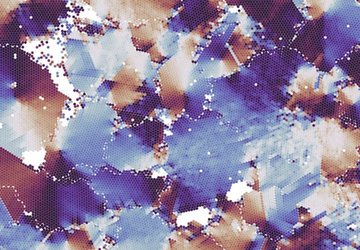
The interaction between growth and the active migration of cells plays a crucial role in the spatial mixing of growing cell colonies. This connection was discovered by scientists from the Department of Living Matter Physics at the Max Planck Institute for Dynamics and Self-Organization (MPI-DS). Their results provide new approaches to understanding the dynamics of bacterial colonies and tumors. The ability to actively migrate is a fundamental…
First Light! The spectro-polarimeter of the world's largest solar telescope in Hawaii looks at the Sun for the first time. The instrument was developed in Germany.
he world's largest solar telescope, the U.S. National Science Foundation (NSF) Daniel K. Inouye Solar Telescope in Hawaii, has reached an important milestone. After almost 15 years of preparation, the German instrument for the Inouye Solar Telescope, the Visible Tunable Filtergraph (VTF), has now taken its first images. The imaging spectro-polarimeter was developed and built at the Institute for Solar Physics (KIS) in Freiburg (Germany). The Max…
Researchers at Göttingen University show keys to nature conservation measures at landscape level
How can the loss of species and habitats in agricultural landscapes be stopped? Up to now, measures have mostly been implemented by individual farms. In contrast, agri-environmental measures that are planned across farms at landscape level offer greater potential for creating suitable habitats for different species as a mosaic in the landscape. However, successful landscape level approaches also require cooperation between farms and other…
Astrocytes help to understand the evolution of the human brain
Astrocytes appear to play a more important role in the evolution of the brain than previously thought. A team of researchers led by Aleksandra Pękowska from the Nencki Institute of Experimental Biology in Warsaw has discovered new genes and mechanisms that contribute to this process. The study, in which Rüdiger Behr from the German Primate Center was also involved, was published in the journal Cell Stem Cell. Astrocytes are star-shaped cells in…
Researchers from the University of Bayreuth and the Max Planck Institute for Dynamics and Self-Organisation in Göttingen have investigated the movement patterns of unicellular, hydrogen-producing green algae under different light intensities. Their findings will contribute to optimising the use of these microorganisms in biotechnological applications, such as the production of renewable energy sources. The team has published its results in the…
Researchers investigate certificates promising sustainability for cocoa cultivation in Ghana
Sustainability certificates such as Fairtrade, Rainforest Alliance and Cocoa Life promise to improve the livelihoods of small-scale cocoa producers while preserving the biodiversity on their plantations. Together with the European Commission's Joint Research Centre, researchers from the University of Göttingen have investigated whether sustainability certificates actually achieve both these goals. To find out, they carried out an analysis within…